Why toric lenses are different
A standard lens is rotationally symmetrical, so it does not matter how it sits. A toric lens has different power across two axes and must stay aligned, usually through a weighted bottom edge. If it rotates, vision blurs. Colour printing adds thickness, which makes stabilisation harder.
The realistic range
Most coloured toric ranges cover cylinder up to about -2.25 and axis in 10-degree steps. Above that, clear toric lenses are usually the only option. Daily disposable torics in colour are the rarest; monthly and longer cycles are more common.
Choosing colour when the range is limited
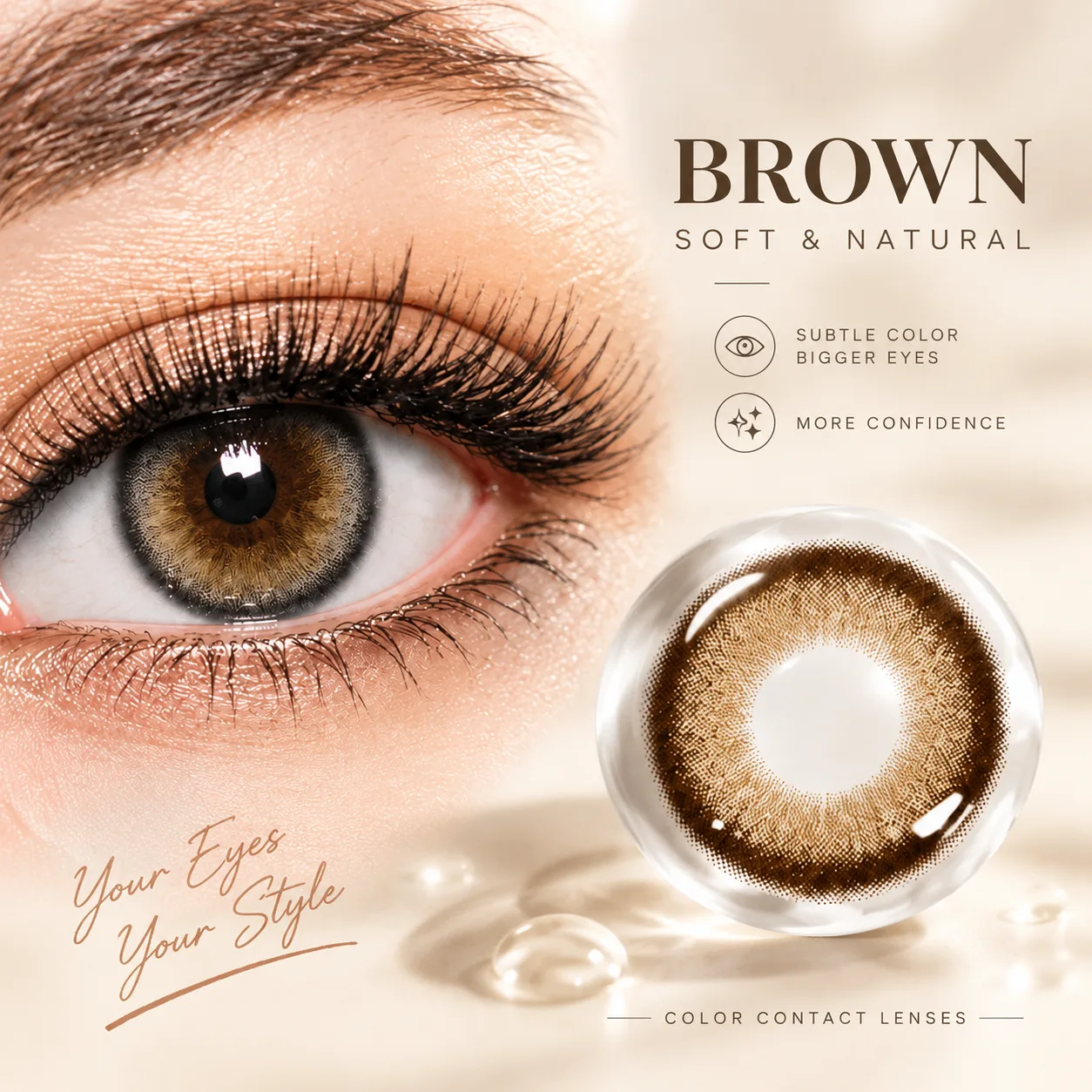
Start from the powers available, then pick the closest shade. Natural browns and hazels tend to be stocked in more powers than dramatic greys or blues. If your cylinder is at the edge of the range, expect fewer design options.
Trial and rotation
Expect a short adaptation period. If vision fluctuates through the day, the lens is rotating, and the fit needs review rather than a different colour.
Frequently Asked Questions
Can I wear normal coloured lenses if I have astigmatism?
Only for short cosmetic use and only if your eye care professional agrees. An uncorrected cylinder leaves vision blurry, which is a safety issue when driving.
Are coloured toric lenses more expensive?
Usually yes, because manufacturing is more complex and volumes are lower.
Can astigmatism get worse from wearing them?
A properly fitted lens does not cause astigmatism to worsen. Poor fit and overwear cause other problems.