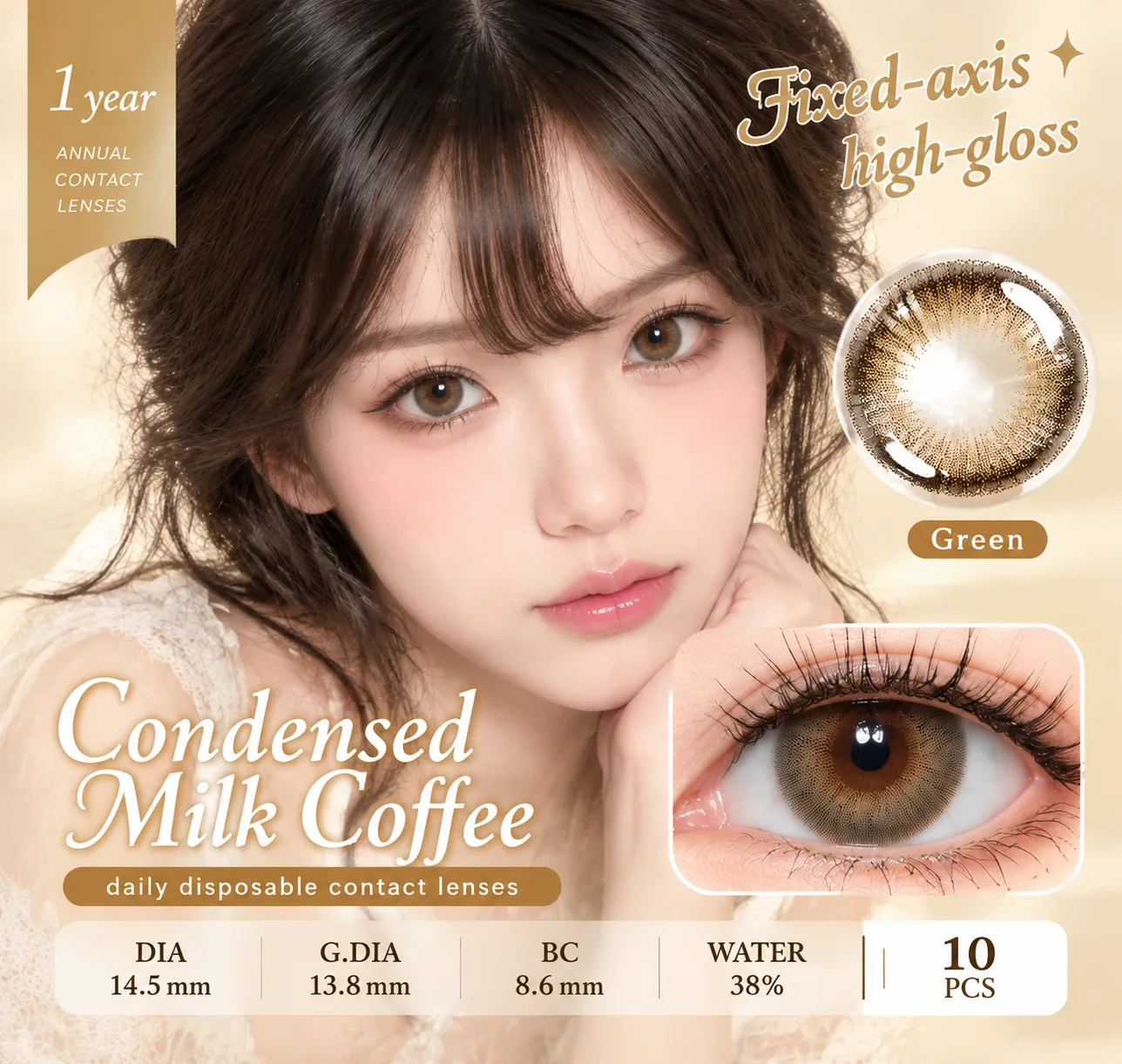
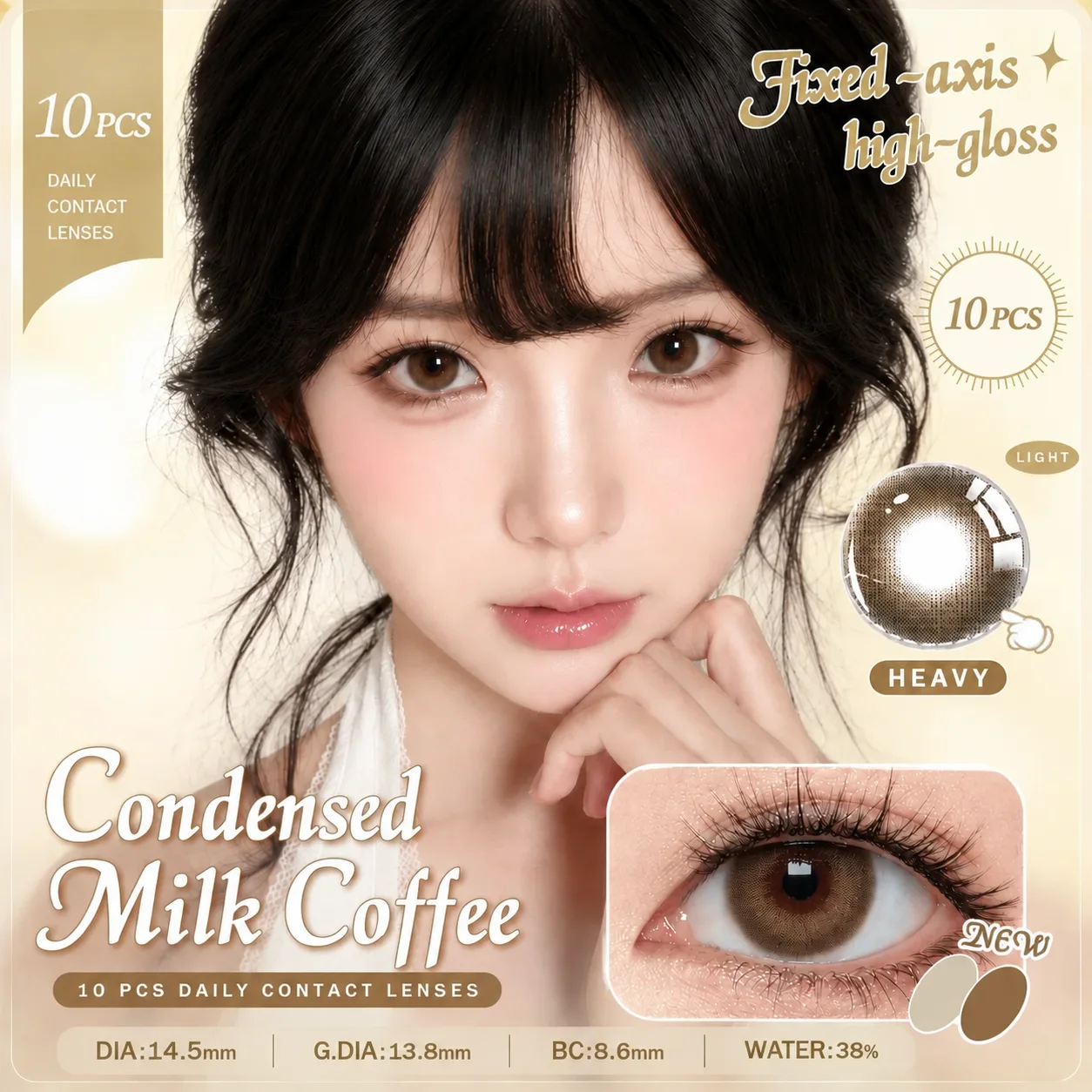
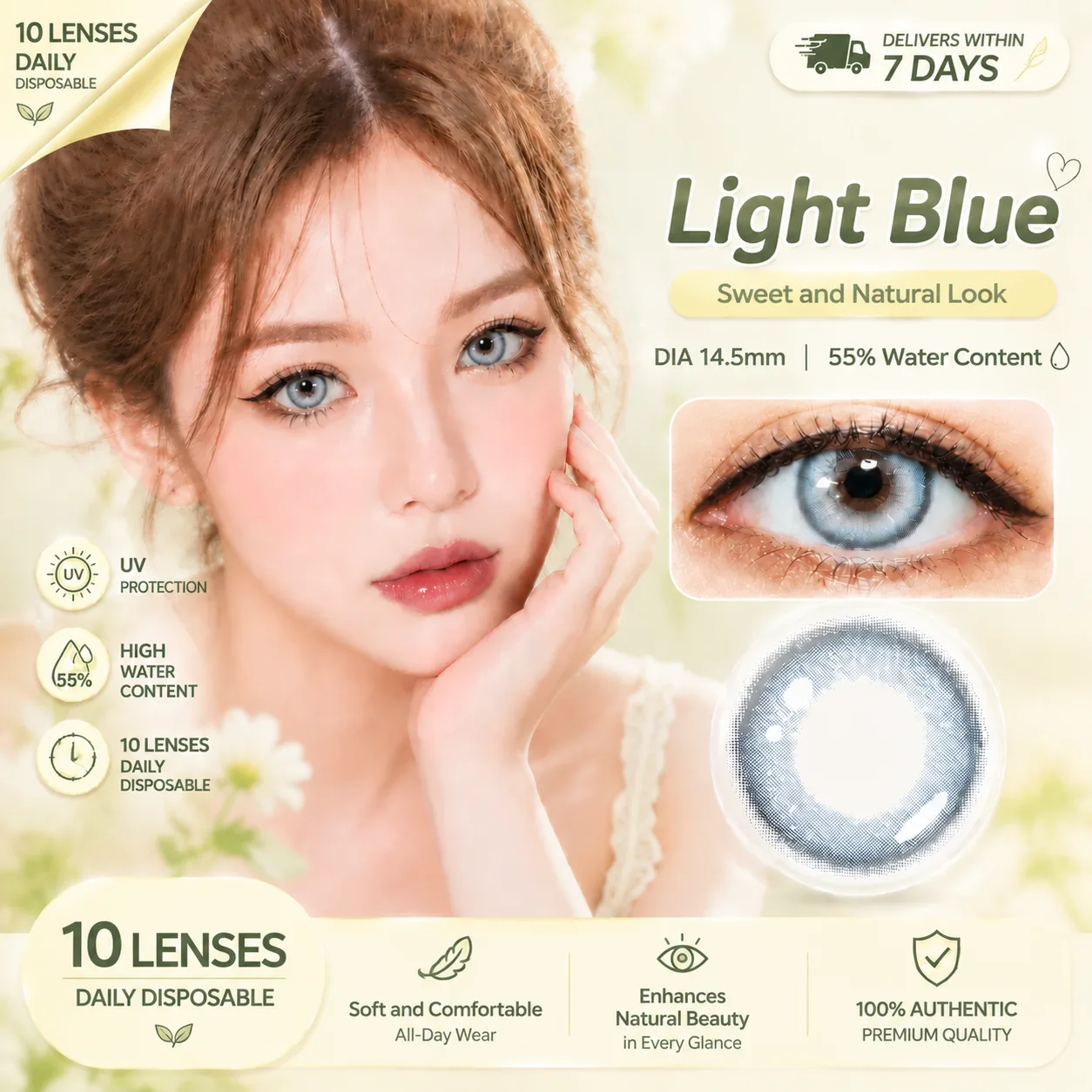
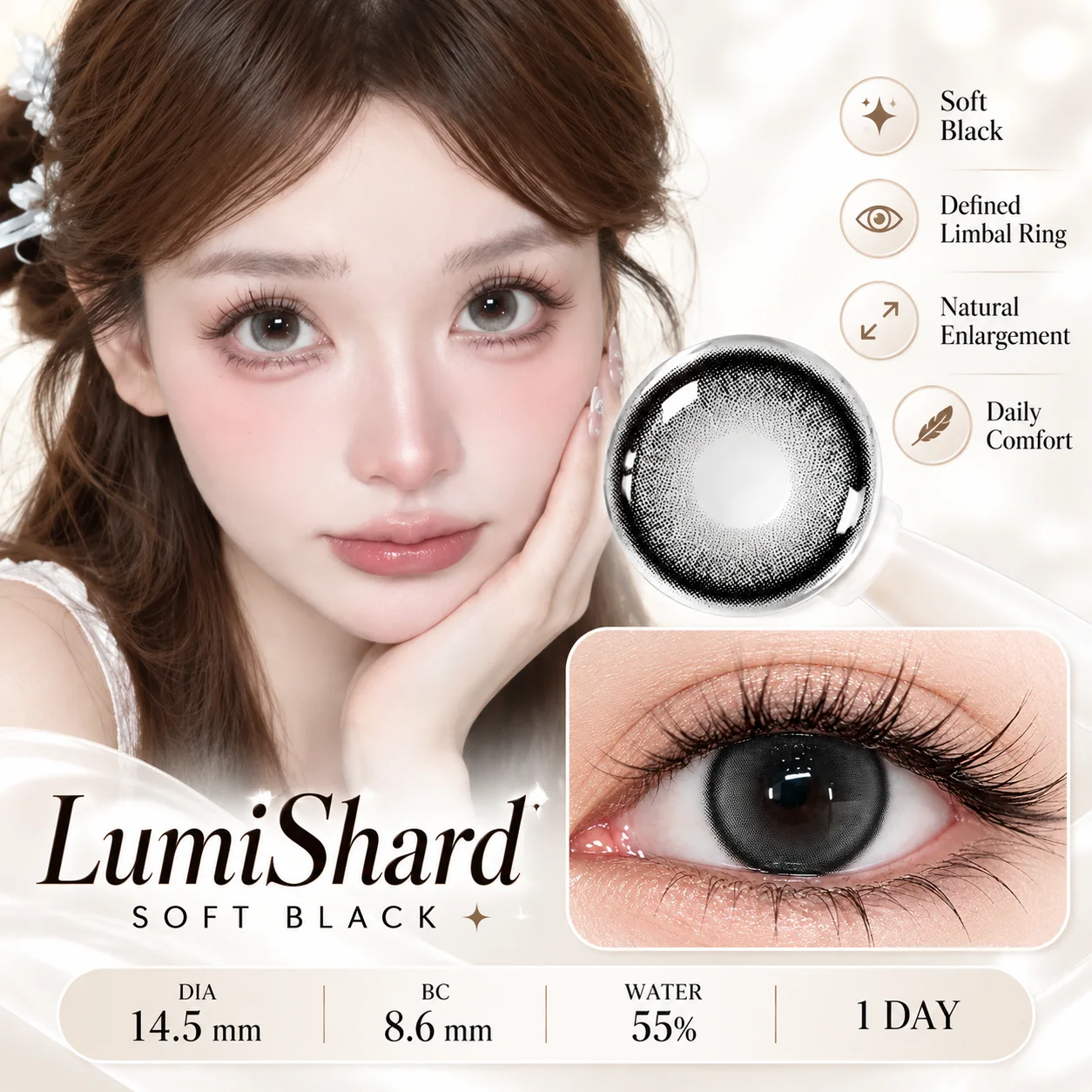
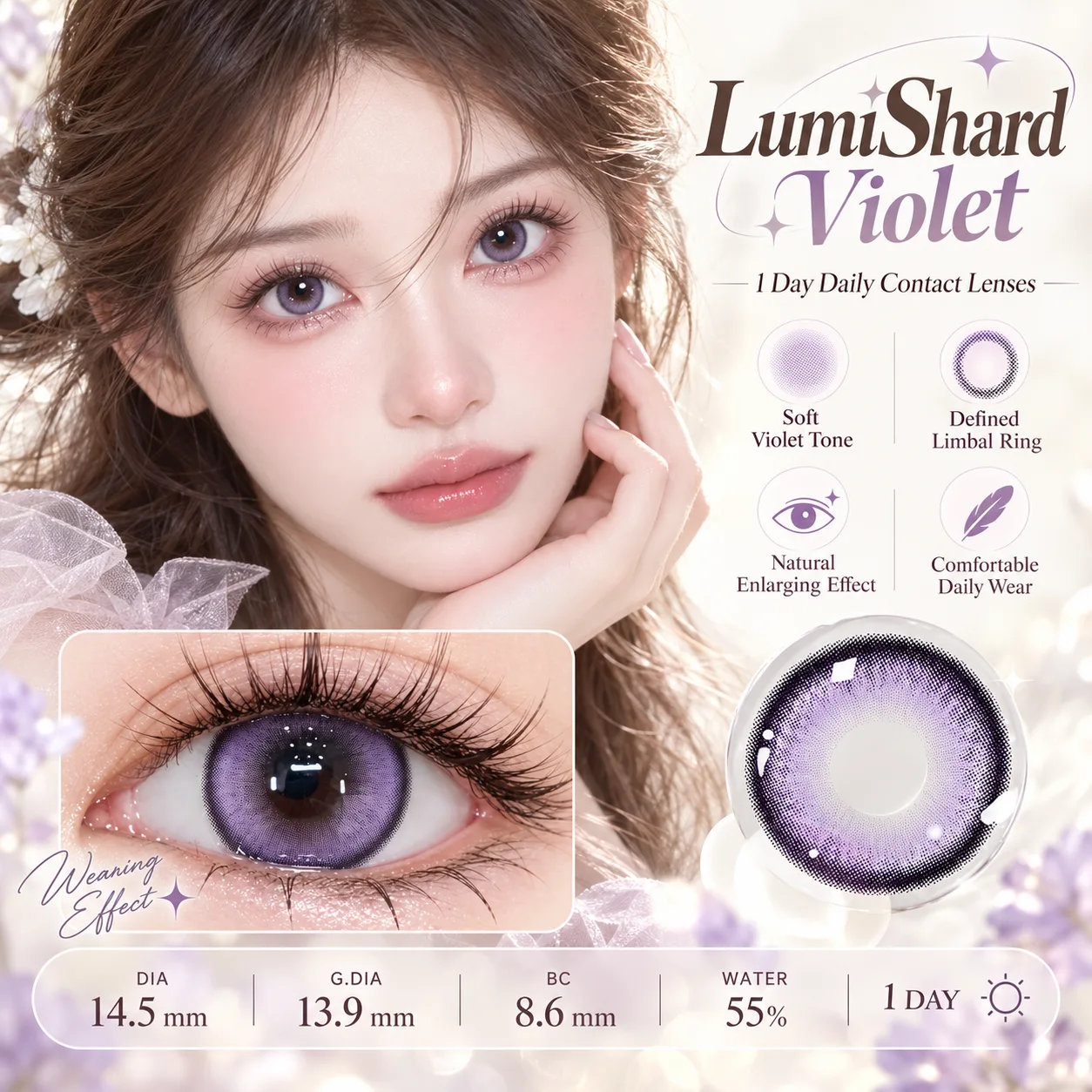
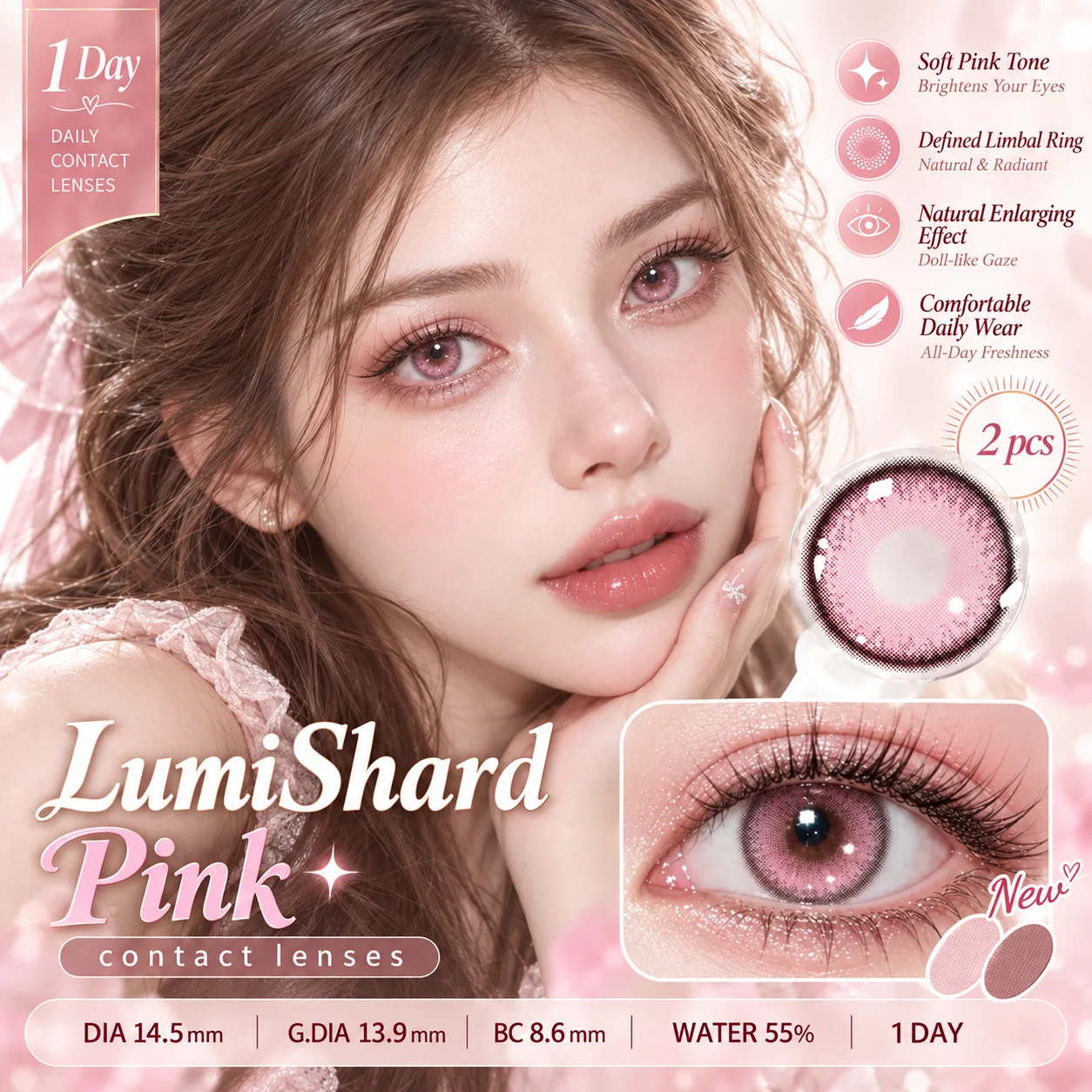
Diameter is the lens
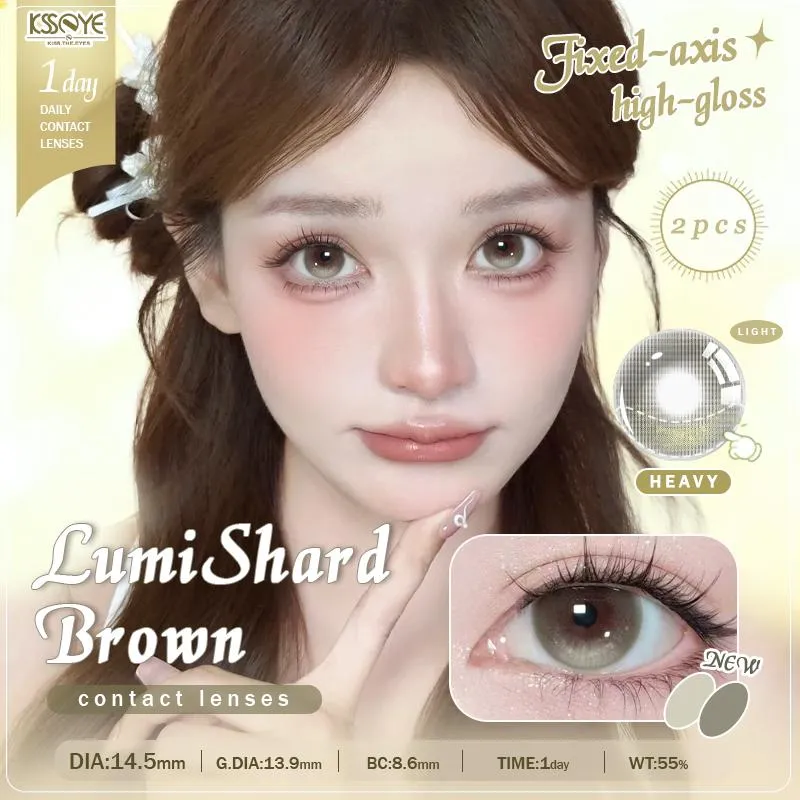
DIA measures the full width including the clear skirt that rests on the white of the eye. It affects comfort and how the lens sits, not just appearance.
Graphic diameter is the colour
The printed area, usually 12.8 to 14.0 mm. A larger graphic leaves less clear skirt and pushes colour toward the limbal ring, which enlarges the eye more.
Two lenses, same DIA
A 14.2 mm lens with a 13.2 mm graphic reads as a subtle enhancement. A 14.2 mm lens with a 13.8 mm graphic reads as a clear enlargement. Same diameter, different result.
Matching your iris
Measure the visible iris in a straight-on photo. A graphic diameter close to that width looks natural; more than about 1 mm larger reads as cosmetic.
Frequently Asked Questions
Which matters more for a natural look?
Graphic diameter. It decides how much colour sits over the iris.
Does a larger graphic feel different?
It can feel slightly firmer at the edge, but the fit is decided by base curve and diameter.
Can I compare graphic diameter across brands?
Yes, if both list it. Many do not, which is a reason to buy from brands that publish it.